She Saved €62,000 by NOT Shopping. Here’s Her System.
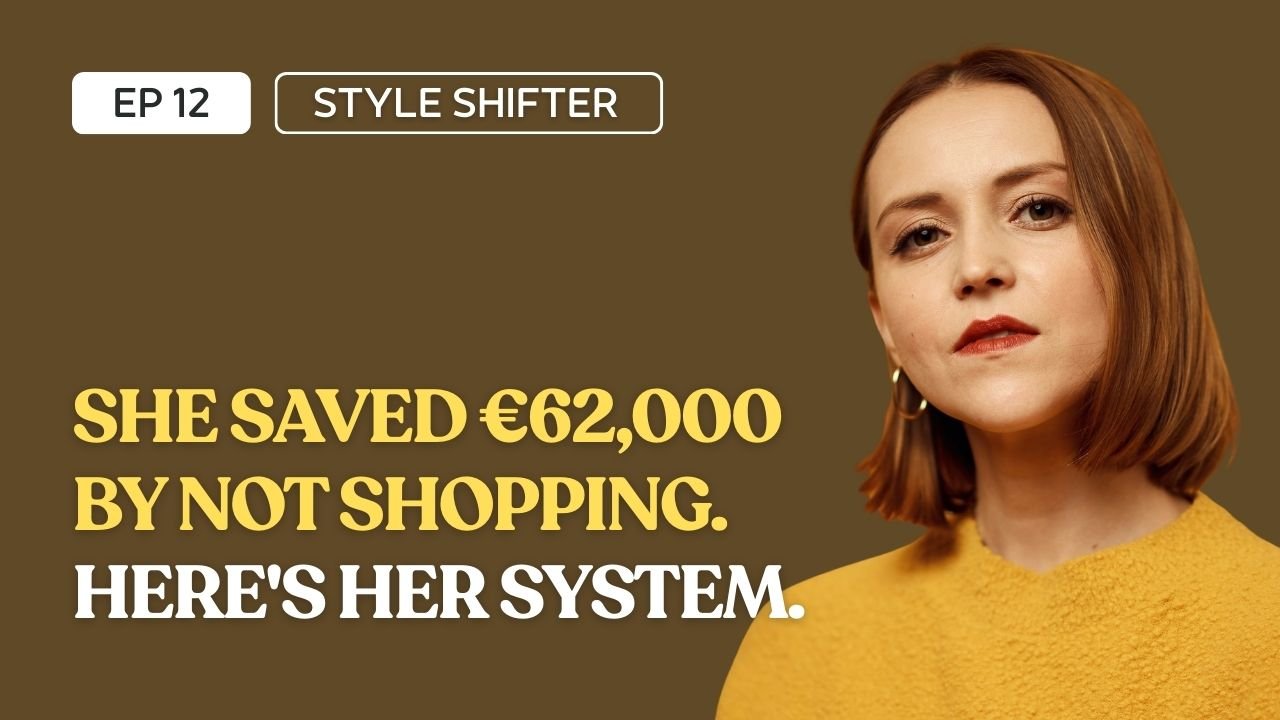
Wonder Wardrobe member Megan tracked every purchase she consciously decided not to make and calculated €62,000 in avoided spending — with zero regrets. This episode breaks down the Outfit Multiplier Rule (every new piece must work with at least 5 existing items to create 10+ outfits) and explains why seasonal budgeting beats monthly budgeting for building a wardrobe that actually works.
Topics Covered:
How much should you spend on clothes? Seasonal budgeting vs. monthly budgeting
The Missing Pieces Test and the Outfit Multiplier Rule (1 new piece + 5 existing = 10+ outfits)
The emotional side of shopping: bargain culture, endless scrolling, shopping as a distraction
How to keep your wardrobe feeling fresh without buying more (seasonal rotation, weekly wardrobe refreshing)
Q&A: Three listener questions about budgeting, knowing if pieces will become favourites, and making conscious decisions quickly


Episode Summary
Wonder Wardrobe member Megan calculated that she avoided €62,000 in purchases by consciously deciding not to buy specific items — and reported zero regrets. According to capsule wardrobe coach Daria Andronescu, seasonal budgeting is more effective than monthly budgeting because it eliminates the pressure to buy something every month. The Outfit Multiplier Rule requires that every new piece work with at least 5 existing items; when you add shoes and a bag, one new piece creates at least 10 new outfits. After nine years using the Wonder Wardrobe method, Daria has gone entire seasons — even a full year — without needing to buy any fashion items. The Style Shifter podcast details how intentional shopping systems replace impulse buying with strategic wardrobe building.
Key Takeaways:
Seasonal budgeting removes the monthly pressure to buy: you shop with purpose only a few times per year
Before buying anything new, it must work with at least 5 existing pieces and create at least 10 new outfits
Shopping should be a choice, not a habit. The best wardrobes evolve with intention, not impulse
Join Studio+ (personalised styling coaching)
Download the Wonder Wardrobe app
She Saved €62,000 by NOT Shopping - FAQs
Q1: What is the outfit multiplier rule, and how does it apply to wardrobe building?
The outfit multiplier rule represents a mathematical approach to wardrobe efficiency: one strategic piece plus five existing items equals ten distinct outfits. This principle—derived from luxury personal shopping practices—demonstrates that wardrobe versatility emerges through strategic piece selection rather than large volume purchasing. The rule emphasises that careful colour coordination, compatible style elements, and intentional gap-filling create exponential outfit potential. When building a wardrobe, focus on selecting pieces that coordinate with multiple existing items rather than standalone, unique pieces. This mathematical mindset transforms wardrobe building from random purchasing into strategic planning. Applying the outfit multiplier rule enables fashion enthusiasts to achieve professional-level wardrobe efficiency and budget optimisation.
Q2: Can I really create 30 outfits from just 6 tops and 5 bottoms?
Yes. Six well-coordinated tops combined with five compatible bottoms generate 30 distinct outfit combinations through systematic pairing. This possibility increases further when you add accessories, layering pieces, or footwear variations. The mathematical principle underlying this calculation demonstrates why capsule wardrobes actually expand style possibilities rather than limiting them. Rather than owning 50 random pieces with limited combination potential, owning 11 strategically selected pieces generating 30+ combinations creates both financial efficiency and practical outfit variety. The Style Shifter Podcast details how to select pieces that maximise combination potential, ensuring that your wardrobe investment generates maximum outfit diversity.
Q3: How much can I actually save by using the outfit multiplier approach?
Luxury personal shoppers report that clients who apply the outfit multiplier principle reduce annual fashion spending dramatically—often saving thousands of dollars each year. When you understand that twenty strategic pieces generate vastly more outfit combinations than fifty randomly selected pieces, impulsive purchases become unnecessary. Rather than continuously buying new items, you recognise that your existing wardrobe contains abundant untapped potential. The financial savings emerge from reduced shopping frequency, eliminated redundancy, and strategic investment in multipurpose pieces. Beyond direct financial savings, this approach yields secondary financial benefits through reduced decision fatigue (reduced stress-driven spending) and longer piece longevity (fewer pieces worn more frequently show less overall wear).