Fabrics That Keep You Warm: A Complete Winter Guide
Fabrics That Keep You Warm: A Complete Winter Guide.
Why Does Fabric Choice Matter in a Winter Wardrobe?
Fabric choice determines how warm, dry, and comfortable you feel in winter. Some materials trap heat effectively, while others lose warmth quickly.
Choosing the right fabric makes winter outfits easier to build. A wool coat, velvet skirt, or silk base layer each plays a different role in keeping your temperature stable throughout the day.
If you want a space to explore winter fabrics with others, you can also join the free sustainable fashion community inside the Wonder Wardrobe app.
Does Cotton Keep You Warm in Winter?
Cotton does not retain heat because it absorbs moisture and cools quickly. This makes it unreliable as a standalone winter fabric.
Cotton works when used for comfort layers. A cotton T-shirt under a wool jumper or a cotton blouse under a blazer gives softness without relying on cotton for insulation.
Is Tencel a Warm Fabric in Cold Weather?
Tencel is breathable and smooth but does not trap heat well. It behaves similarly to cotton and loses warmth fast.
Tencel tops or dresses work well under knits or structured jackets. A Tencel blouse under a wool cardigan keeps the outfit light while adding a soft, comfortable base.
For a deeper look at different fibres and how they perform, check the free fabric guides inside the Sustainable Style module of the Wonder Wardrobe app.
Can Silk Keep You Warm in Winter?
Silk naturally regulates temperature and makes an excellent base layer. Thicker silks offer light insulation while remaining smooth against the skin.
Silk camisoles or long-sleeve silk tops work well under wool sweaters because they add warmth without bulk. A silk blouse also stays comfortable indoors, where overheated spaces can make heavier fabrics uncomfortable.
Does Viscose Provide Enough Warmth for Winter?
Viscose holds some warmth, but traps sweat because it is not breathable. It can feel warm at first, but becomes uncomfortable as moisture builds.
Viscose dresses or blouses pair better with breathable inner layers. A viscose dress with a cotton slip underneath stays more comfortable than wearing viscose directly against the skin.
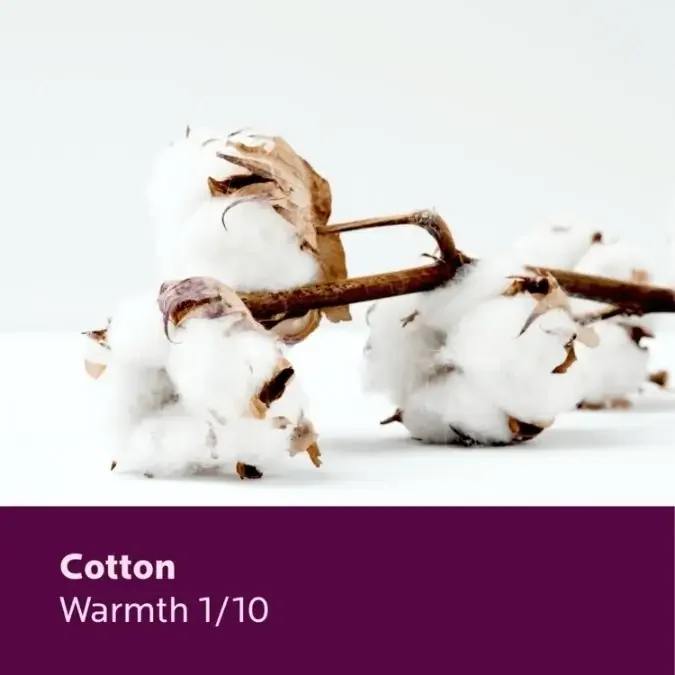
Cotton — Warmth 1/10. Soft but not insulating; works only as a comfort layer, not a warm one.
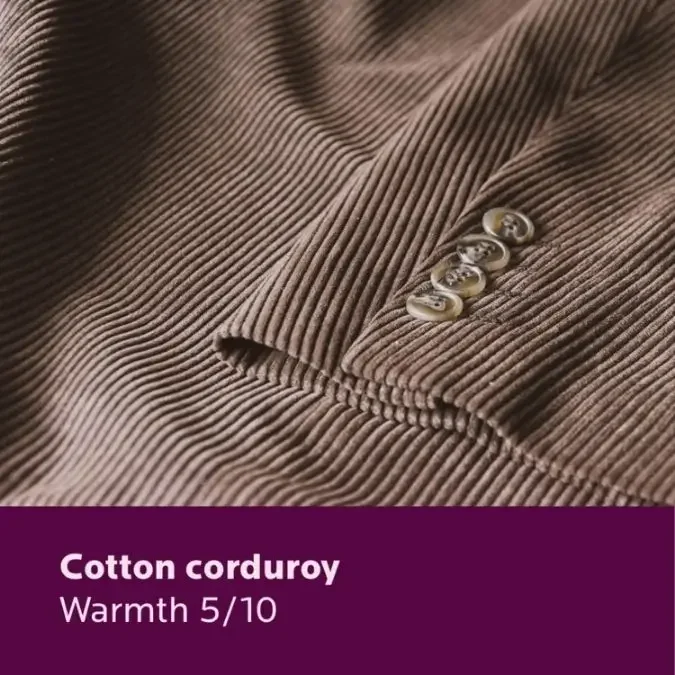
Cotton Corduroy — Warmth 5/10. The ribbed weave traps more air, making it warmer than regular cotton.
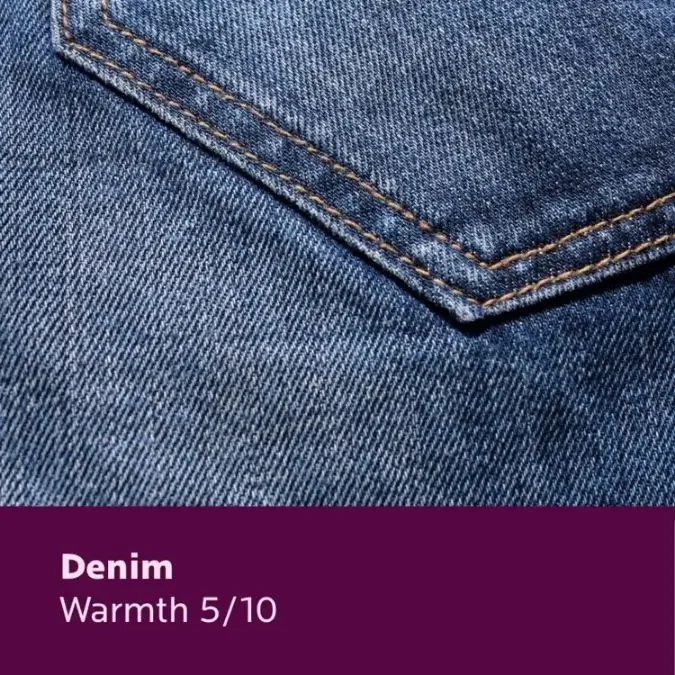
Denim — Warmth 5/10. Dense and durable, but warmth depends entirely on layering.

Lyocell — Warmth 3/10. Comfortable and breathable, but too cool to wear alone in winter.
Is Polyester a Good Fabric for Staying Warm?
Polyester traps heat well and repels water, making it effective for insulation. This is why many fleeces and puffers use polyester fills or fibres.
Polyester works best in outer layers. A polyester-lined coat, fleece mid-layer, or synthetic puffer keeps warmth in while protecting against wind. Avoid polyester tops directly against the skin if you sweat easily.
Is Velvet a Warm Choice for Winter Outfits?
Velvet made from wool or silk offers excellent warmth, while polyester velvet provides moderate insulation but still feels seasonal.
A velvet blazer over a thin knit instantly increases warmth and adds visual depth. A velvet skirt or dress works well for winter events when paired with warm tights and a wool coat.
Velvet also appears often in winter capsule wardrobes, like in the Classic Style Capsule: 44 Outfit Ideas.
Does Corduroy Keep You Warm?
Corduroy insulates well because its ribbed structure traps air. Wool or cotton corduroy is especially warm and comfortable in cold weather.
Corduroy trousers paired with a merino sweater create a reliably warm weekday outfit. A corduroy jacket layered over knitwear adds structure and heat without feeling heavy.
Is Wool the Warmest Fabric for Winter?
Wool is one of the warmest natural fibres due to its ability to trap air and regulate moisture. It stays warm even when damp and adapts well to changing temperatures.
A wool jumper, wool coat, or merino base layer works reliably in winter. For indoor comfort, a fine merino turtleneck gives warmth without the bulk of heavier knits.
For more examples of wool-based outfits, see How to Stay Warm & Chic This Winter.
How Warm Is Acrylic Compared to Wool?
Acrylic feels warm at first but lacks the breathability and true insulation of wool. It also loses shape faster and traps sweat.
Acrylic sweaters work better when worn with breathable layers underneath, such as a cotton or silk top. This combination reduces overheating while still providing some warmth.
Which Is Warmer: Down or Synthetic Puffer Jackets?
Down offers the highest warmth-to-weight ratio, making it ideal for very cold climates. A down puffer keeps you warm on long outdoor walks or commutes.
Synthetic puffers are heavier but more affordable. A recycled synthetic jacket is a good everyday option for milder winters or wet conditions, where down can lose loft.
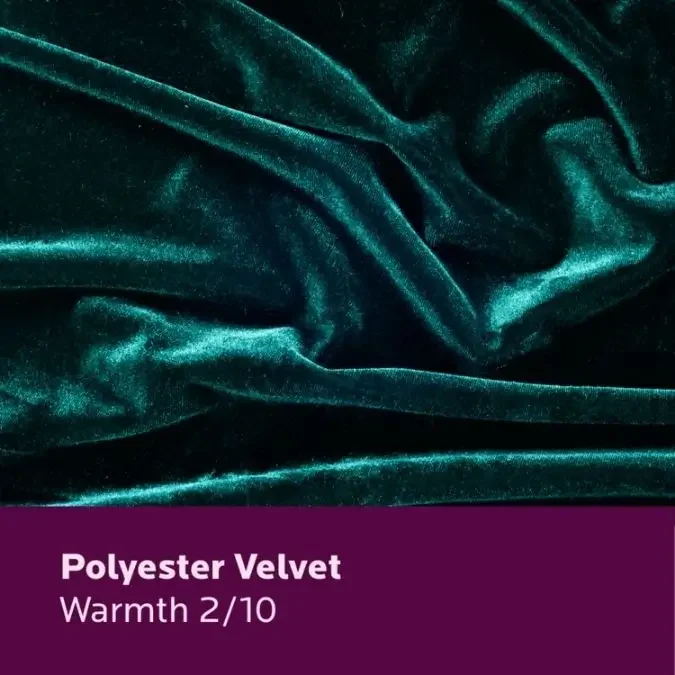
Polyester Velvet — Warmth 2/10. Beautiful texture, but warmth depends entirely on layering.
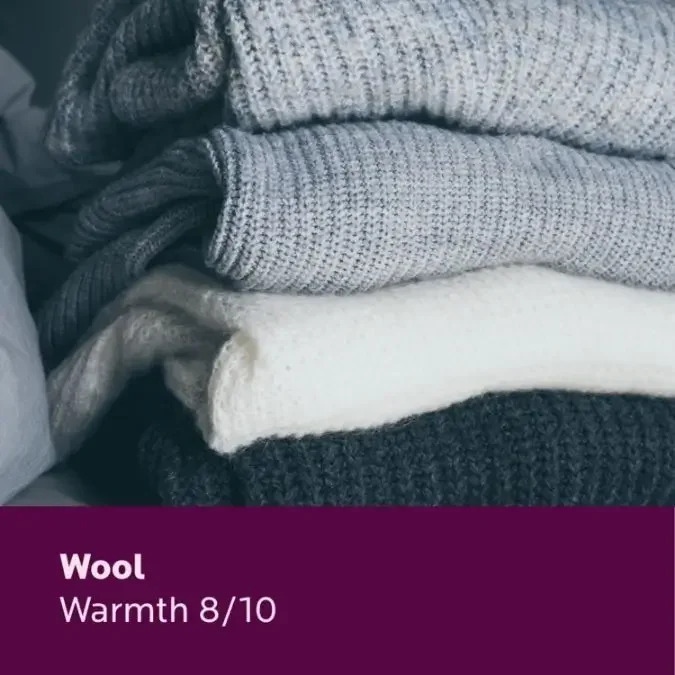
Wool — Warmth 8/10. A winter essential thanks to its ability to trap heat and manage moisture.
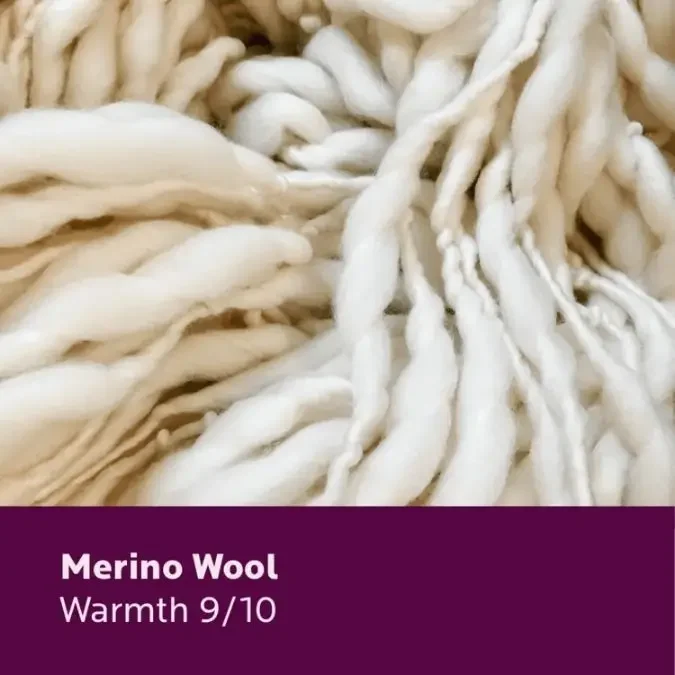
Merino Wool — Warmth 9/10. Warm, breathable, and reliable even when temperatures drop.
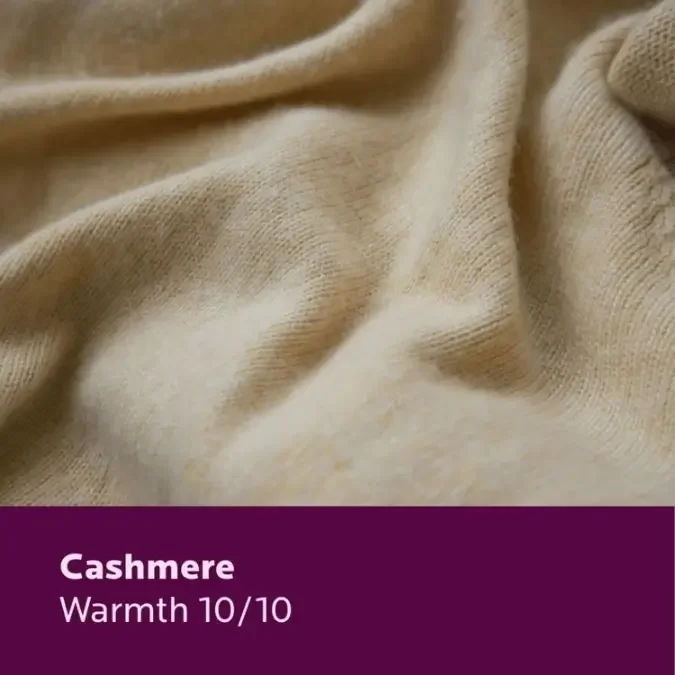
Cashmere — Warmth 10/10. One of the warmest natural fibres; ideal for winter sweaters.
Which Fabrics Are Best for a Warm and Comfortable Winter Wardrobe?
The most reliable winter fabrics are wool, velvet, corduroy, silk, and leather. These materials insulate well and stay comfortable throughout the day.
A wool coat over a silk top, paired with corduroy trousers, creates a warm outfit with varied textures. Mixing these materials adds depth while keeping you insulated.
What If Most of My Clothes Are Not Warm Enough?
You can still build warm outfits without replacing everything. Strategic layering makes lighter fabrics usable throughout winter. Layering traps air between garments, creating natural insulation that stabilises your body temperature.
A cotton shirt under a wool cardigan, topped with a lined coat, creates more warmth than any piece worn alone. Thin layers allow you to adjust the temperature as needed.
For a step-by-step layering method, explore the 3-layer winter guide here.
Which materials do you reach for the most when the temperature drops, and what surprised you from this list?