How Do You Know If a Fashion Brand Is Sustainable?
Looking at labels closely is the first step in understanding whether a fashion brand is sustainable.
What exactly makes a sustainable brand?
A sustainable brand follows the World Commission on Environment and Development’s definition: meeting present needs without harming future generations. This idea gives you a simple filter. A sustainable brand should operate without shifting environmental or social costs onto others.
A sustainable brand balances the present and the future by protecting people, resources, and ecosystems. If a company’s choices harm long-term well-being, it cannot claim true sustainability.
How to Recognise a Sustainable Brand Fast
Sustainable fashion starts with clarity, so the first step is knowing what “good” looks like. When something catches your eye in a store, a sustainable brand should make its impact easy to understand. You shouldn’t need detective skills to feel confident about what you're buying. Sustainable fashion relies on transparency, responsible materials, and ethical production. These are the three signs you can assess in under a minute once you know what to look for.
Zero-waste design as a sign of real sustainability
A sustainable brand often starts with design, aiming for zero waste and circular use. Their pieces are created to reduce leftovers, reuse materials, and extend each item’s life. If a garment is designed to last, repair, or recycle easily, you’re likely looking at responsible work.
Sustainable fashion also means thoughtful production cycles: brands rethink how clothes are used, not only how they are made.
Fair wages and safe working conditions matter
Ethical fashion requires that workers are paid fairly and can negotiate their conditions safely. Union rights or strong worker protections are reliable indicators that a sustainable brand respects the people behind the clothes.
Ethical fashion also looks at partners and factories globally. If a brand values wellbeing throughout its supply chain, that’s a meaningful sign of integrity.
Signs a brand is not sustainable
A sustainable brand never hides essential information. Missing factory details, no environmental policies, vague certifications, or misleading labels suggest the opposite.
Ethical fashion does not rely on harmful synthetic blends, overproduction, or “green” marketing without evidence. If profit consistently comes before ecological impact, walk away.
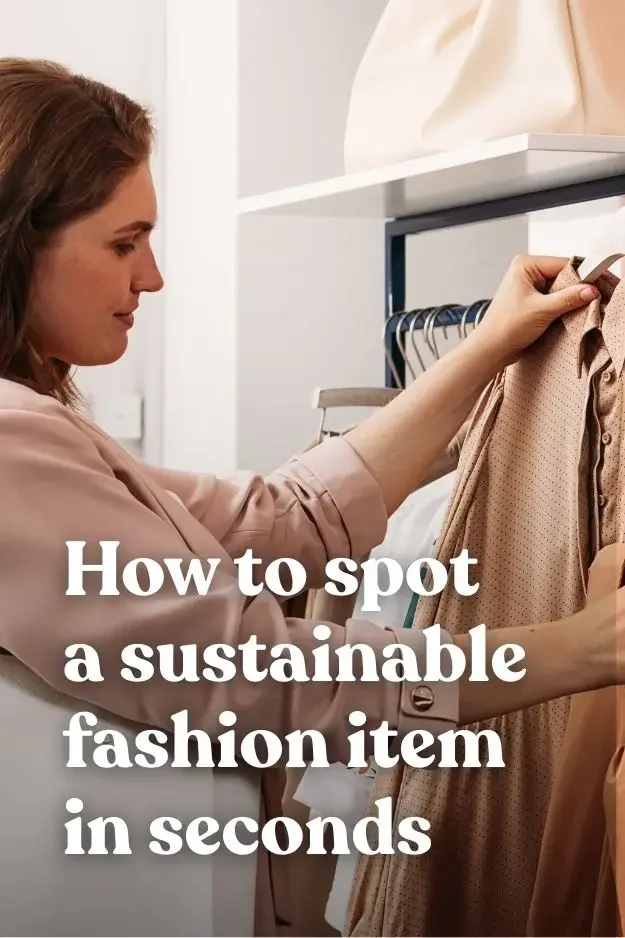
Checking the fabric label and material composition helps you spot a sustainable fashion item quickly.
How to Check If an Item Is Sustainable in the Store
Step 1: Look at the fabric label
Sustainable fashion relies on natural or recycled materials such as organic cotton, linen, hemp, Tencel, wool, and recycled synthetics. When a label shows acrylic, nylon, polyester, blended fibers, it means the item likely carries a heavy environmental cost.
Sustainable brand choices consider water use, land use, and chemical waste. If the fiber list challenges these values, the item is not sustainable.
Step 2: Check for certifications that prove sustainability
A sustainable brand often uses independent certifications to validate its claims. Here are the most common ones:
Use this list to understand certification meaning:
Global Organic Textile Standard (GOTS) — ≥70% organic fibers.
OEKO-TEX Standard 100 — free from toxic chemicals.
PETA Vegan Approved — vegan and cruelty-free.
Responsible Wool Standard (RWS) — responsibly managed farms.
Ethical fashion uses certifications as proof, not decoration.
Step 3: Don’t rely on the “Made in…” tag alone
Ethical fashion cannot be judged by country of origin. Excellent and terrible factories exist everywhere, so the location means little without context.
Sustainable brands often add certifications like Fair Trade, World Fair Trade, or B Corp, which verify fair wages, safe conditions, and responsible business practices. When a brand lacks all of these, approach carefully.
Step 4: Use the Good On You app
Sustainable fashion becomes easier to understand with tools like the Good On You app. The app rates brands on their environmental impact, labor conditions, and treatment of animals.
Ethical fashion transparency is visible here. The 5-star system shows instantly whether a brand respects people, planet, and materials.
Step 5: Check the brand’s website for real information
A sustainable brand shares supplier lists, factory details, material sources, and environmental commitments openly. If a website avoids these topics entirely, the brand is not prioritizing transparency.
Sustainable fashion businesses know their customers care, so they make key information easy to find. If you must dig endlessly, that’s already an answer.
Our community shares real experiences with sustainable brands to help you make confident choices.
Want help choosing sustainable brands?
Sustainable fashion becomes much easier when you have people to ask. Inside the Wonder Wardrobe Community, members share their experiences with different brands, help each other find specific items, compare materials, and even browse second-hand pieces from each other’s wardrobes.
If you ever feel unsure about a label or want another opinion, you can ask the community directly. It’s an ad-free, warm, thoughtful space built on conversation, curiosity and creativity.
You can join the Wonder Wardrobe app for free and start exploring anytime.
Why your personal choices also influence sustainability
Ethical fashion improves fastest when brands and customers act together. Your choices, such as wearing clothes longer, repairing what you own, and supporting responsible labels, create demand for better industry practices.
Sustainable fashion also benefits from curiosity and experimentation. Learning what you own, what you love, and what lasts reduces waste naturally.
It often saves money long-term. If you’re curious how this works in real numbers, I shared a breakdown in How Much $$$ I Saved with Sustainable Fashion. It’s a useful reference if you’re wondering whether responsible choices truly pay off.
Sustainable fashion gets easier as you learn these signs. With practice, you’ll know immediately whether a brand is transparent, responsible, and aligned with your values.
Have you ever discovered a brand wasn’t as sustainable as it claimed? What gave it away?