What Is a Capsule Wardrobe? The Method That Starts With What You Already Own
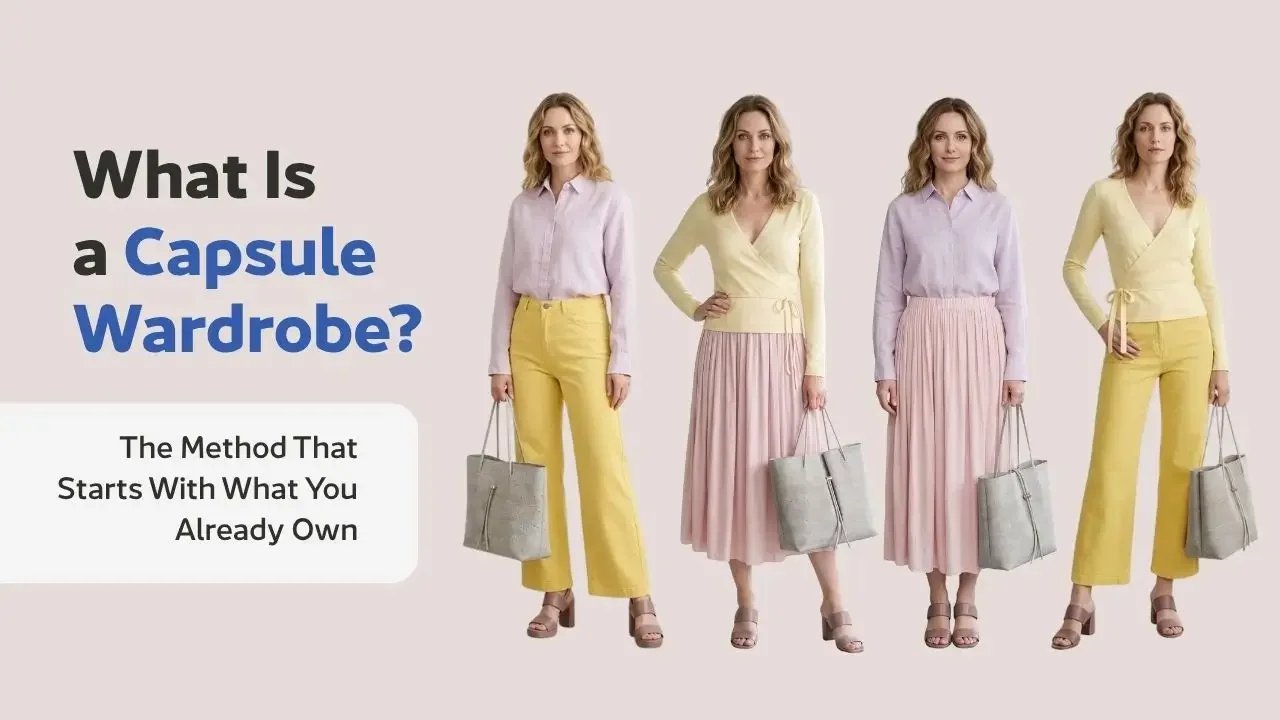
A capsule wardrobe is a curated collection of versatile, interchangeable pieces designed to create as many outfit combinations as your life requires from fewer items. While most guides define it as "33 essential basics," the Wonder Wardrobe method takes a fundamentally different approach. One built around colour harmony, body harmony, and style harmony rather than arbitrary item counts.
The method starts with the clothes you already own, personalises your capsule to your skin tone, body proportions, and identity, and improves season by season so you never need a "perfect" wardrobe from day one. It has been used by 17,000+ women across 106 countries and was developed by Wonder Wardrobe styling coach Daria Andronescu.
Unlike conventional capsule wardrobe guides, the Wonder Wardrobe approach builds a system around your actual life, without requiring you to throw away your existing clothes or start with all-neutral basics.
What Is a Capsule Wardrobe, Really?
A capsule wardrobe is a small, curated collection of clothes that all coordinate with one another. The term was coined by London boutique owner Susie Faux in the 1970s, popularised by Donna Karan's "7 Easy Pieces" in 1985, and brought into the minimalism movement by Courtney Carver's Project 333 in 2010. The core idea has stayed the same: fewer clothes, more combinations.
But here's what matters: the definition tells you almost nothing about whether a capsule wardrobe will actually work for you. Two women can both own a "capsule wardrobe" and have completely different experiences. One might feel elegant every morning, pulling together effortless outfits. The other might stand in front of the same pieces feeling uninspired, uncertain, and frustrated.
The difference is in the method used to build it. Understanding how to build a capsule wardrobe matters more than knowing what a capsule wardrobe is.
A capsule wardrobe is only as good as the system behind it. Without the right framework, you're just assembling a smaller closet. And a smaller closet that doesn't fit you is actually more limiting than a larger one that does.
So if everyone agrees on the definition, why do most capsule wardrobes fail within three months?
Why Most Capsule Wardrobe Guides Fail
Problem 1: The "Just Buy 33 Basics" Approach
Most capsule wardrobe guides approach the task like a shopping list. Get a white T-shirt, black trousers, navy blazer and a camel coat. Repeat this formula, and you'll have the "essentials." The logic is seductive: if everyone else is wearing these pieces, they must be universally flattering, right?
They're not.
A white T-shirt doesn't look the same on every woman. On someone with cool skin undertones and dark hair, it can feel clean and sophisticated. On someone with warm and golden skin undertones and light brown hair, the same white T-shirt can look harsh and draining. It pulls the colour from their face.
The mainstream capsule wardrobe guide didn't account for this because it was written for an abstract, universal woman who doesn't exist. When you follow a one-size-fits-all list, you end up with pieces that look reasonably okay on someone, just not necessarily on you.
This is why so many women buy a "capsule wardrobe" checklist and then never wear half of it. The pieces might technically coordinate, but they don't work for your colouring, your body, or your lifestyle.
Problem 2: One-Size-Fits-All Colour Palettes
Almost every capsule wardrobe guide defaults to the same colour story: black, white, grey, navy, and camel. These are the "safe" neutrals, the colours that guides promise will "go with everything." They do technically coordinate with a wide range of other colours. But "coordinating" and "flattering" are not the same thing.
For a woman with warm, olive undertones, black and white together can feel stark. Navy might wash her out entirely. Camel alone could work beautifully, but paired with the guide's prescribed palette, she looks tired. She follows the instructions perfectly and still feels dull. The guide didn't account for her colouring because it was written for a universal woman who doesn't exist.
A capsule wardrobe is only versatile if you'll actually wear it. And you won't wear it if the colours make you look tired.
Problem 3: Ignoring Your Body, Your Life, Your Identity
Beyond colour, most guides ignore the fact that bodies are different. An oversized blazer reads as effortlessly chic on someone with narrow shoulders. On someone with broad shoulders and a fuller chest, the same blazer adds volume where volume already exists. The right silhouette matters more than people realize, yet most guides treat it as an afterthought rather than a core design principle.
What "Interchangeable" Actually Means
Here's the critical distinction that most guides miss: there's a difference between pieces that coordinate and pieces that are truly interchangeable. Most guides create wardrobes where pieces sort of go together. It's a gamble.
True interchangeability means any top genuinely works with any bottom, because the colours harmonise, the silhouettes are designed for your body, and the pieces express a coherent identity. When colour harmony, body harmony, and style harmony are all in place, interchangeability becomes automatic.
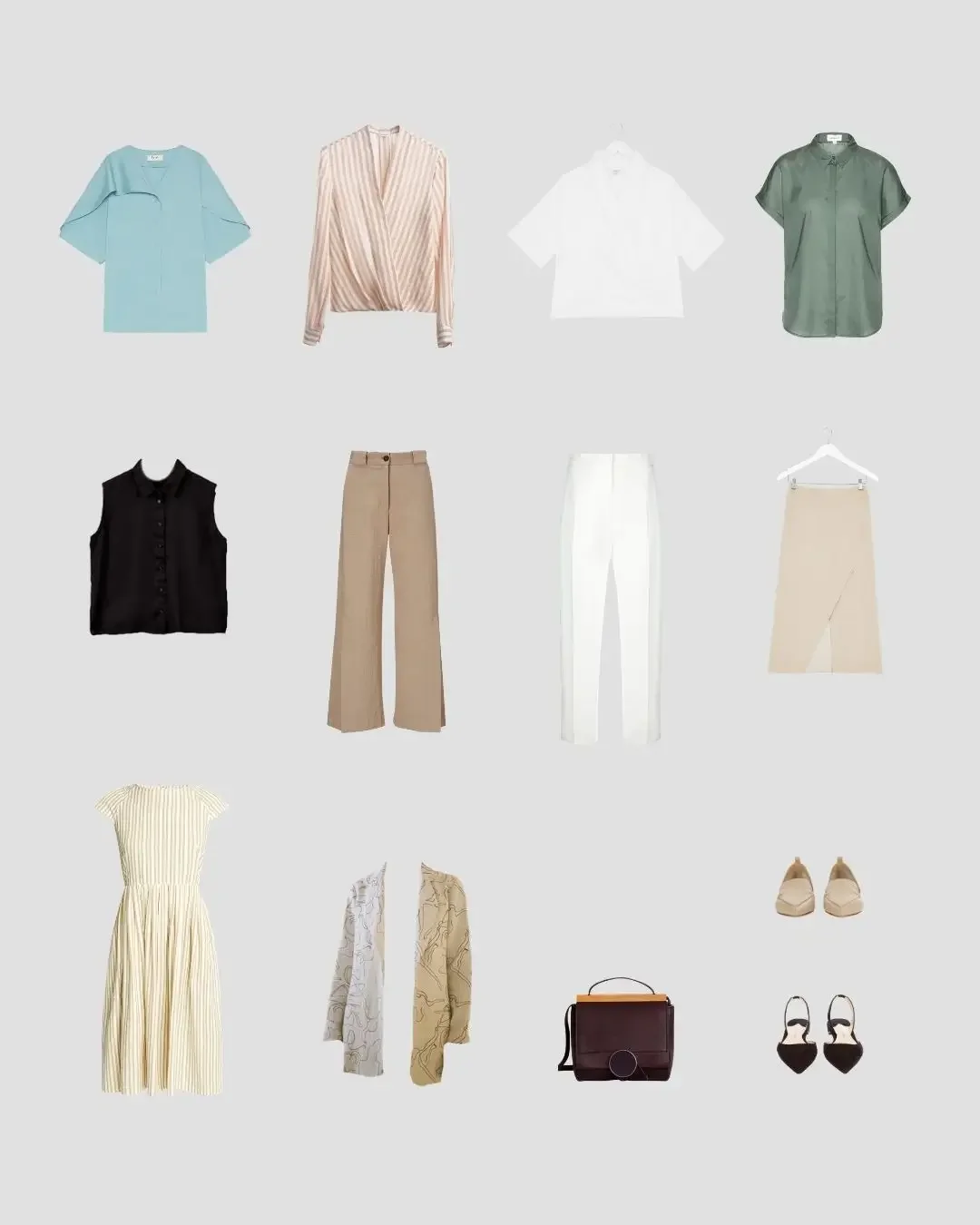
All the pieces in a summer business casual capsule wardrobe
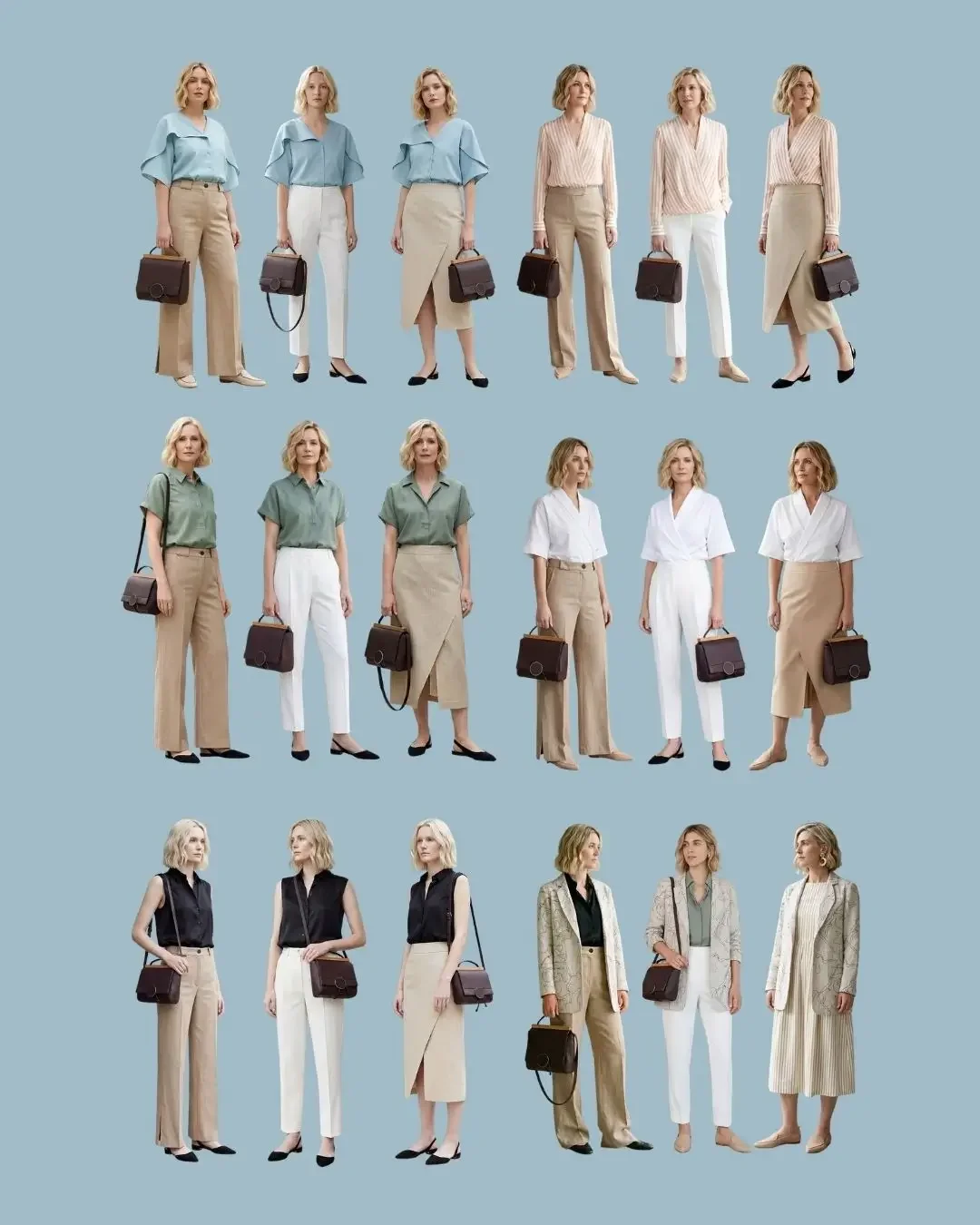
18 summer business casual outfit combinations for women from one capsule
The Wonder Wardrobe Method:
A Capsule That's Built Around You
Pillar 1 - Colour Harmony: Your Flattering Palette
The first pillar is about finding the exact colours that make you look beautiful. I analyse your skin undertone: whether your complexion has warm, golden qualities or cool, rosy qualities, or a balanced mix. I look at your eye colour and hair pigment. From this analysis, I identify the palette that makes you look the most beautiful and fresh.
This palette is specific to you. It might include warm ivory instead of cool white. It might feature teal and emerald instead of navy. It might centre around terracotta, rust, and warm gold instead of camel and grey. Or it might be completely different from all of these.
The right colour next to your face affects how light bounces off, which affects how others perceive you, which affects how you feel when you see yourself in the mirror.
A capsule wardrobe built on your colour palette means that every piece does this work for you. Every colour earns its place because it actually makes you look better.

Spring Capsule Wardrobe — Winter Colour Season Outfits
Pillar 2 - Body Harmony: Silhouettes That Work for Your Proportions
The second pillar addresses something most guides ignore entirely: the geometry of your body. You have a specific set of proportions: shoulders, waist, hips, bust, and your height. When a silhouette respects that architecture, it creates visual harmony. The cut skims where it should skim and creates structure where you need it.
I tailor cuts and silhouettes to your specific proportions. If you have a petite frame, the right cuts are completely different from those that work on a tall woman. A €100 top in the right silhouette can look more expensive than a €500 top in the wrong one.
In a capsule wardrobe built on body harmony, every piece honours your proportions. When you get dressed, nothing is fighting your frame.
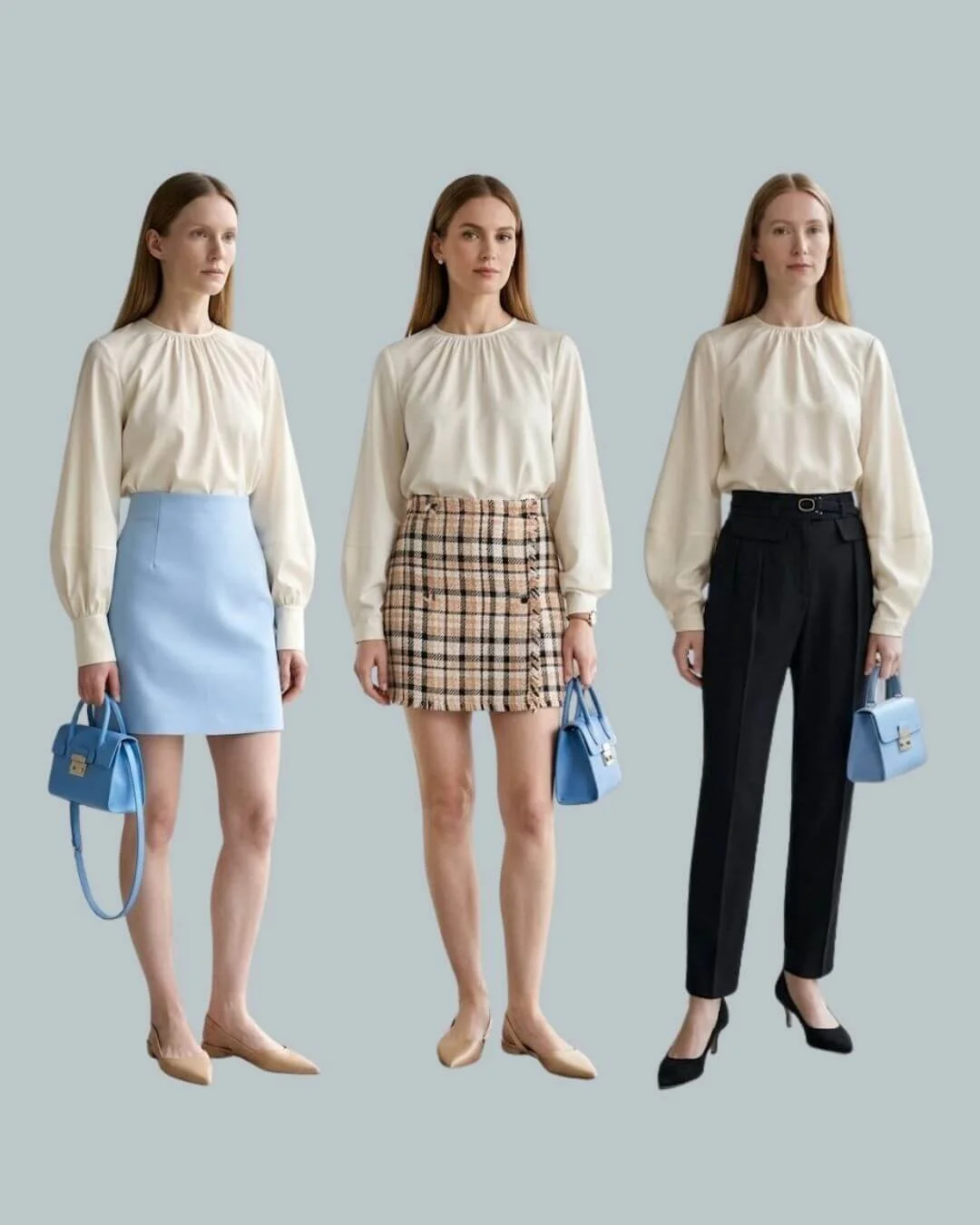
Petite capsule wardrobe: cream blouse styled 3 ways
Pillar 3 - Style Harmony: Expressing Who You Actually Are
The third pillar is about personal identity. Your style is how you communicate who you are before you open your mouth. A Classic capsule looks completely different from a Dramatic one. A Romantic capsule is not the same as a Natural one. They're all valid, and they each deserve a capsule built around them.
A capsule wardrobe that doesn't reflect your identity is a capsule you'll eventually abandon. You can follow every other rule perfectly, but if you're not expressing who you actually are, you'll feel like you're playing dress-up in someone else's wardrobe. I help you identify your style identity, so you can create your capsule around it.
The result? Your wardrobe feels like you from the moment you open the closet.
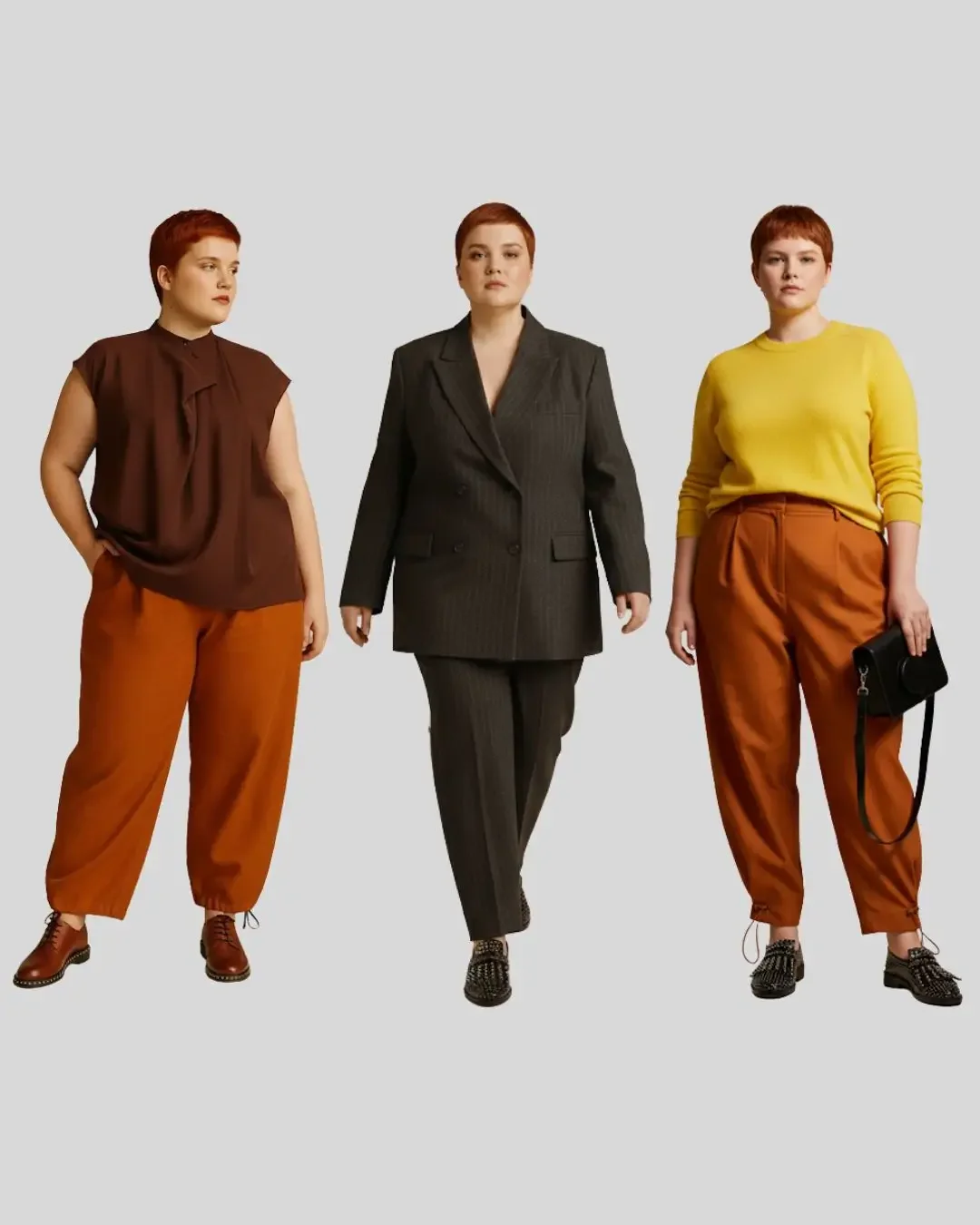
Plus-Size Capsule Wardrobe — Warm Autumn Colour Palette
Why Three Pillars Instead of One Checklist
A capsule wardrobe guide that gives you a checklist is solving for simplicity, not for you. When you build a capsule around three pillars instead, colour, body, style, you get a wardrobe with a signature.
And here's what most guides won't tell you: you don't need to get it perfect on the first try. This capsule wardrobe method is designed to improve season by season. Your first capsule might be 70% right, built mostly from pieces you already own, with a few gaps you'll fill over time. Next season, you refine. The season after that, you refine again. Each rotation gets sharper, more intentional, more you. This is a system that grows with your life.
When all three pillars align, interchangeability is automatic. You know your pieces work together. You get dressed and feel like yourself. That's the difference between a capsule wardrobe that you follow and one that you actually wear. This is the capsule wardrobe method that works because it was designed around real women, not abstract ideals.
How to Build a Capsule Wardrobe:
The Step-by-Step Method
Building a capsule wardrobe is methodical. Whether you're looking at a capsule wardrobe for beginners or refining one you've had for years, the process is the same. It's what I've guided 17,000+ women through, refined over a decade of seasonal rotation in my own closet. The difference between someone who builds a capsule that actually works and one that gathers dust lies in precision at each stage.
Step 1: Find Your Colour Season
This is where the aha moment happens for most people. Your skin has an undertone (warm, cool, or neutral) and a depth (light, medium, or deep). When you wear colours aligned with your season, your skin glows. When you wear the wrong season, you look tired and washed out, even in "flattering" colours your best friend recommended.
A capsule wardrobe built on colours that actively work for you means every single piece earns its place. You buy the specific warm sand or cool taupe that makes your skin luminous, instead of generic "beige basics."
The difference is subtle but cumulative: more compliments, more confidence, no second-guessing in the mirror.
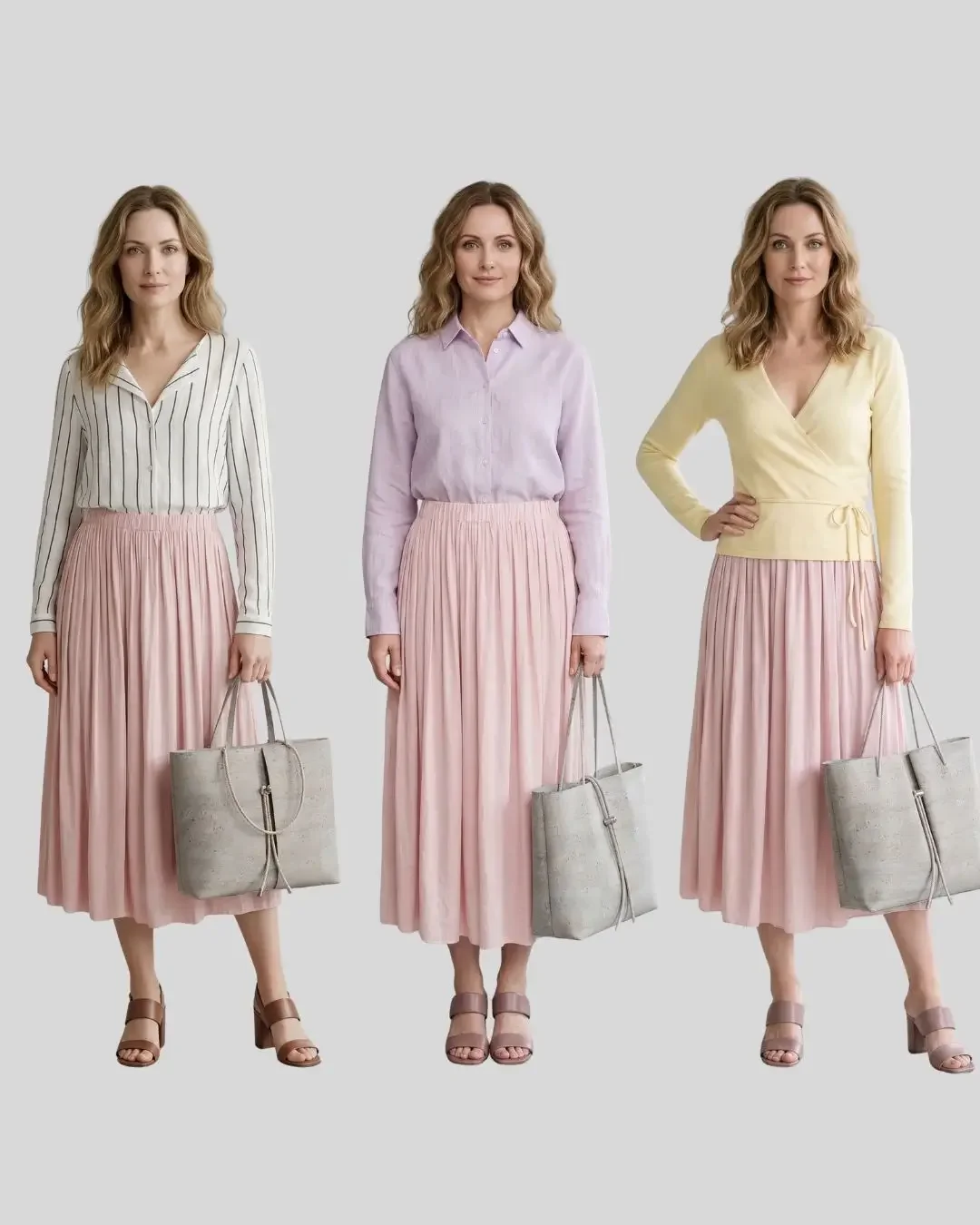
Capsule Wardrobe Mix and Match: One Skirt, Three Outfits
Step 2: Map Your Proportions
Body type language is vague. Body proportions are specific and actionable. Where are your widest points? How long is your torso relative to your legs? These measurements determine which cuts will elongate you, which will create balance, and which will work against your natural frame.
When you know your proportions, you stop buying things that don't fit your geometry, even if they fit your size label.
Step 3: Choose Your Core Pieces Based on Your Style
Here's where most guides fail. They hand you a list: white T-shirt, blue jeans, neutral blazer, cream trousers. That's not a capsule wardrobe. That's a shopping list. Your core pieces need to be chosen specifically for interchangeability within your colour season and body proportions, and the number of pieces depends entirely on your life.
A woman who works from home in a warm climate needs a very different capsule than someone who commutes to an office in a Nordic winter and travels for work. A plus-size capsule wardrobe looks different from a size 6 capsule, and both are equally valid. Some women thrive with a 10-piece seasonal capsule because they have minimal lifestyle variety. Others have 40-piece seasonal capsules because they work in multiple dress codes and need to dress for evenings, weekends, and sports. There is no magic number.
What matters is that every single piece was chosen because it works with the others and serves your real life.
Step 4: Audit What You Already Own (You Don't Start From Scratch)
Most guides tell you to clear your closet. I tell you the opposite: the method starts with what you already have. You don't throw anything away. You rotate. This is the foundational shift that changes how women think about their wardrobes.
Open your closet and count everything. Sort by season. Pull out the things you actually reach for and note why. The things taking up space but never getting worn? Store them out of sight. They come back when their season returns. They feel fresh.
Most women discover they're closer to a functioning capsule than they thought. Your first capsule is built mostly from existing pieces, with a few strategic additions. Then each season, you improve. You swap one piece that wasn't quite right. You add something that fills a gap.
Season by season, your wardrobe gets sharper without ever requiring a dramatic overhaul.
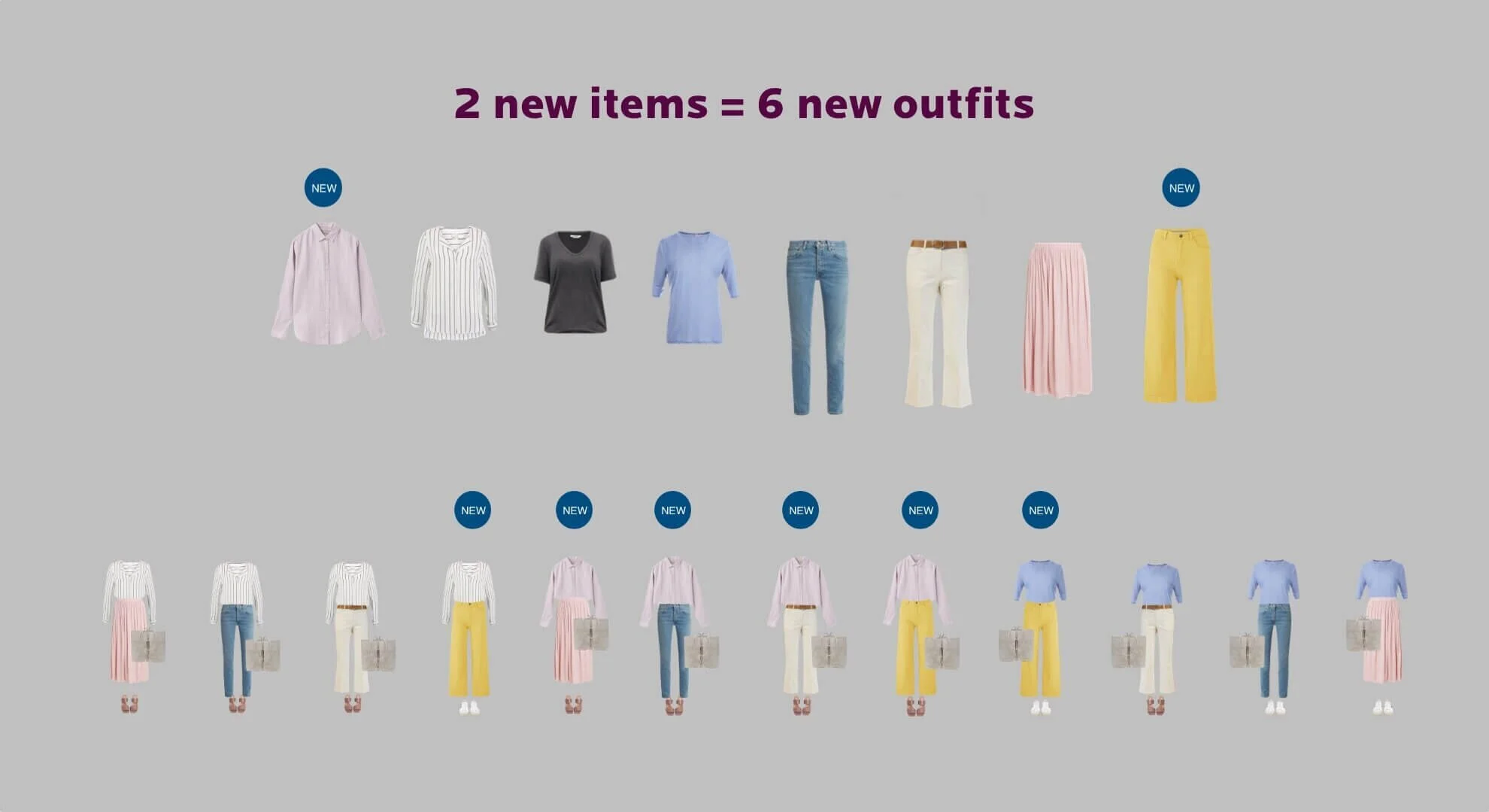
Capsule Wardrobe Method — 2 New Items Create 6 New Outfits
Step 5: Create Your Outfit Combinations
This is the test. Lay out your pieces and create combinations. Does every top work with every bottom? If a piece only pairs with one or two others, something needs swapping out. The interchangeability test is honest. It eliminates the orphaned pieces that only work with one outfit.
What remains is a wardrobe where every combination is viable.
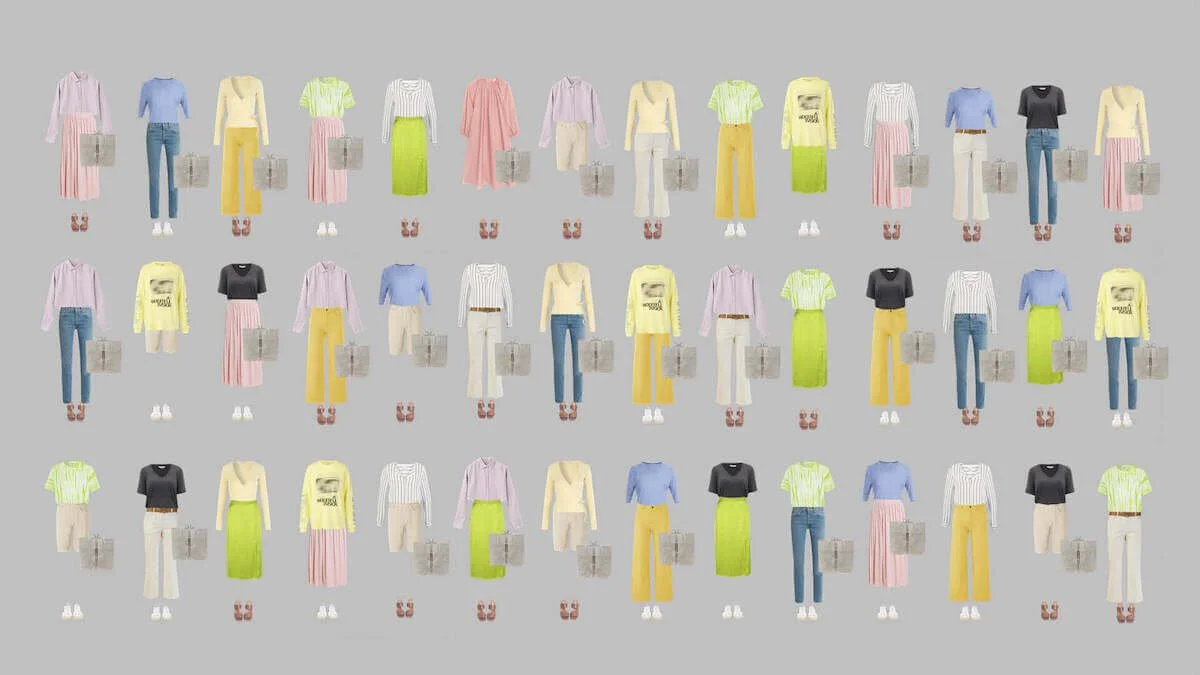
How Many Outfits in a Capsule Wardrobe: 30+ From 10 Pieces
The Capsule Wardrobe Essentials:
What Actually Goes In
The internet sells you a myth: that there are universal capsule wardrobe essentials. Timeless pieces, neutrals, the same ten basics every woman needs.
This approach creates two problems.
First, it ignores the fact that women are different: different climates, different lifestyles, different bodies, different skin tones.
Second, it treats a capsule wardrobe like furniture, something you assemble and never think about again.
Real capsules change with seasons. They evolve with you.
A Flexible Framework (Not a Rigid List)
Your essentials depend entirely on three things: your colour season, your body proportions, and what your life actually demands. A nurse who works twelve-hour shifts and then goes home to her family needs different essentials than a freelance designer who has client meetings one day and works from her studio the next.
A Warm Autumn woman will build her capsule around rust, olive, mustard, and chocolate. A cool Summer woman will build around soft blues, greys, and mauve. Their essentials lists look completely different, and both are exactly right.
This is why capsule wardrobe checklists fail.
They're written for nobody in particular, which means they work for nobody in particular.
Your Wonder Wardrobe checklist is custom. It starts with your colour palette: the five to eight colours that make up the foundation of your season. Then it adds silhouettes that work with your proportions. Then it adds pieces that match your actual life.
How Seasonal Rotation Changes Everything
The mistake people make is trying to build one capsule wardrobe that works year-round. It's theoretically possible but practically exhausting. You end up with pieces that don't quite fit the season, fabrics that are wrong for the temperature, and a closet packed so full that nothing feels fresh.
Instead, divide your wardrobe into four seasonal capsules. Each season gets its own palette, its own textures, and its own mood.
When June arrives, you pack away your winter pieces: the heavy sweaters, the thick coats, the deeper tones. They go into storage, completely out of sight. Your summer capsule wardrobe comes forward.
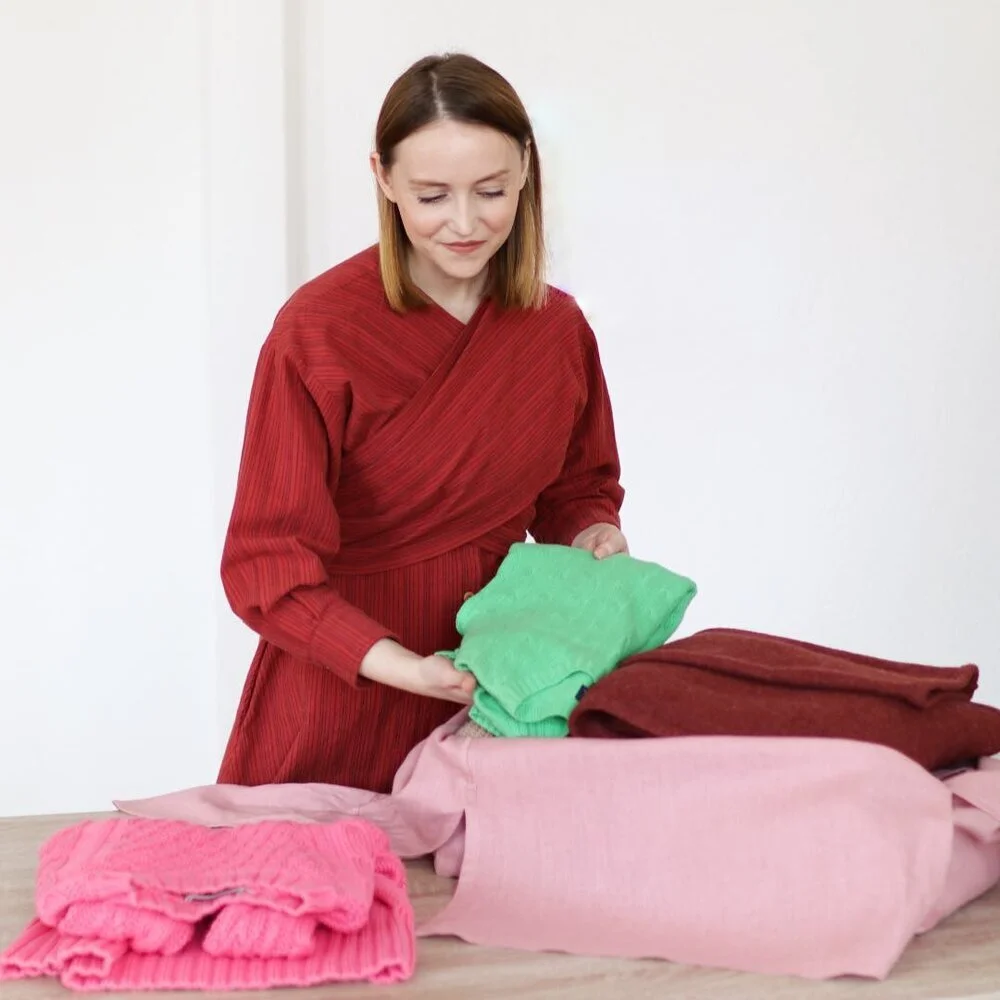
Capsule Wardrobe Audit — Sort What You Already Own
At the end of summer, when you're tired of linen and ready for texture again, your fall capsule wardrobe comes back out. They feel new. You feel excited about them again.
Then spring capsule wardrobe pieces emerge as the weather warms, and the cycle continues.
This is the shift that makes a capsule wardrobe sustainable in the long term. If you've never transitioned between seasons before, I have a guide on winter to spring wardrobe transition that walks you through it. Instead of trying to make everything work together at once, you're working with one season at a time.
That's manageable.
That's where decision fatigue disappears. And each time a season returns, you have a natural moment to evaluate: what worked? What didn't? What one piece would make next season better? This is how the method improves over time without ever demanding perfection upfront.
How Many Pieces Do You Need for a Capsule Wardrobe?
How many items in a capsule wardrobe? The number itself is irrelevant. What matters is intentionality. But I know you're looking for a number, because the internet has given you so many conflicting ones.
The Real Answer: It Depends on You
Project 333 claims you need exactly 33 items. Some guides say 37. Others say 50. The internet loves a definitive number because it sells simplicity.
I'm not going to give you false simplicity. The actual answer depends on your lifestyle, your climate, your work environment, and how you define a "piece."
What I can tell you is this: there is a minimum threshold where a capsule becomes functional, and a maximum threshold where it stops being a capsule and becomes a regular wardrobe. Below about ten core pieces, you don't have enough interchangeability to go through a week without repeating outfits or feeling like something's missing. Above about 50 pieces per season, you're maintaining too much inventory and losing the mental clarity that makes a capsule work.
Most people land somewhere between 20 and 40 pieces per season.
The Math: Why Interchangeability Multiplies Your Options
When every top works with every bottom (because they're all in your colour palette and proportions), the outfit combinations multiply fast. Add layers and dresses, and they multiply again. The goal is to have enough outfits for every situation in your life without wasting a single piece.
This is why "how many outfits can I make?" is the wrong question.
The right question is: "Do I have enough outfits for everything I actually do?" When your capsule is built around your real life, the answer is yes, whether that's twenty outfits a season or a hundred.
Capsule Wardrobe FAQ
-
Absolutely. The 33-item rule comes from Project 333, which is a specific challenge designed to encourage people to live with less. It is not a definition of a capsule wardrobe. A capsule wardrobe is fundamentally about intentional curation: knowing every piece, why you own it, and how it works in your life. Some people achieve that with 15 pieces. Others need 75. The number matters far less than the intentionality.
-
No. The Wonder Wardrobe method starts with what you already own. You audit your closet, identify what actually works for you, and build from there. Seasonal rotation means nothing leaves your home. Items just rest until their season returns. You're reorganizing what you have, not starting from zero.
-
Then don't. Your capsule should be built entirely on your colour palette, which might be rich jewel tones, warm earth tones, soft pastels, or bright primaries. A warm Autumn woman can build a capsule around terracotta, olive, cream, and chocolate with zero black in sight. If you do love neutrals, I have a guide on how to wear neutral clothing colours beautifully. Your capsule reflects your taste, not some generic definition of simplicity.
-
Most women take four to six weeks when following a structured method. The colour and body analysis takes a few days. You're learning about yourself, not shopping. Curating and testing combinations takes the remaining time. The process takes time, but it's a permanent solution. Once you've built your seasonal capsules, maintenance is minimal.
-
No. It's for anyone who wants a wardrobe where every piece earns its place. Some capsule wardrobes are 15 pieces, true minimalism. Others are 100+, what I call curated abundance. The philosophy is the same: intentionality. You keep things because they work, they flatter you, and they make you feel capable.
-
A regular wardrobe is what most people have: pieces accumulated over years, some of which fit, some of which don't, some of which you wear and some of which sit unworn. A capsule wardrobe is designed. Every piece was chosen because it works with the others. Nothing sits unused because you weren't sure how to style it. The difference is clarity. With a capsule, you know what you have, and that knowledge compounds into confidence.
Your Next Step
Learning how to build a capsule wardrobe is possible on your own. This guide gives you the framework. But reading about the method and feeling it works for you are two different things.
I've created a free lesson that lets you experience the first step. It walks you through setting a clear style goal: what you don't like about your wardrobe right now, what would change if it worked, and the specific actions that would get you there. By the end, you'll know exactly what you want to change and have a plan to start. You'll also hear from Gillian, a real student who made 20 new outfits from clothes she already owned.
If you're ready for the full method, personalised colour analysis, proportion mapping, capsule building, and seasonal rotation, that's what Studio+ is designed for. It's the complete system I've used with 17,000+ women.
But start with the free lesson. It takes 30 minutes, and it will change how you look at your closet.